Disclosure: This post contains affiliate links. If you buy through them, we may earn a commission at no extra cost to you. Learn more.
ChatGPT is only as good as the prompt you give it. “Write me an ad” gets you generic fluff; a well-engineered prompt gets you copy you can actually run. Below are 15 copy-paste ChatGPT prompts for digital marketing — covering ad copy, SEO, content ideas, and email subject lines — each with exactly when and how to use it for maximum output quality.
How to Get Great Results From These Prompts
Before you copy anything, set up ChatGPT properly. Three rules make every prompt below 10x better:
- Give it context first. In a new chat, paste a short business brief: what you sell, who you sell to, your tone of voice, and your main offer. Refer back to it in every prompt (“using the business brief above”).
- Demand specifics. Add constraints like “under 125 characters,” “no buzzwords,” or “write at a 6th-grade reading level.” Constraints are what turn generic output into usable copy.
- Iterate, don’t accept. The first output is a draft. Reply with “make it more urgent,” “shorter,” or “give me 10 more variations” until it clicks. The best copy usually comes from round three, not round one.
Ad Copy Prompts (1–5)
Prompt 1: The 10-Variation Facebook Ad Generator
Using the business brief above, write 10 Facebook ad primary texts for [PRODUCT]. Each must be under 125 characters, open with a hook in the first 7 words, include one specific benefit with a number, and end with a clear CTA. Vary the angles: pain point, aspiration, social proof, urgency, and curiosity — two of each. No emojis in the first line.
Why it works: it forces angle diversity so you’re actually testing, not just rewording the same ad. Run the winners and kill the losers — that’s how you find a 2x creative in a week.
Prompt 2: The PAS Ad Framework
Write a 90-word ad for [PRODUCT] using the PAS framework: Problem (agitate the specific pain of [TARGET AUDIENCE] in one vivid sentence), Agitation (make the cost of doing nothing concrete with a number or scenario), Solution (introduce [PRODUCT] as the fix with one proof point). Tone: direct, conversational, zero hype words like “revolutionary” or “game-changing.”
Why it works: PAS is the highest-converting short ad structure ever tested. Naming the banned hype words keeps the copy believable.
Prompt 3: The UGC-Style Video Ad Script
Write a 30-second UGC-style video ad script for [PRODUCT]. Format: HOOK (0–3 sec, pattern-interrupt opening line spoken to camera), PROBLEM (3–10 sec, relatable frustration), DEMO (10–20 sec, show the product solving it in 3 quick steps), CTA (20–30 sec, offer + urgency). Write it like a real customer talks — contractions, filler-free, no corporate language.
Why it works: UGC-style scripts are the top-performing creative format on TikTok and Reels. This prompt gives you the exact beats that hold attention past the 3-second mark.
Prompt 4: The Competitor Angle Steal
Here are 3 competitor ads: [PASTE ADS]. Analyze the angle, hook, and offer in each. Then write 5 new ad angles for [MY PRODUCT] that target the same audience but differentiate on [MY UNIQUE ANGLE]. Each angle: one-sentence concept plus a 40-word ad draft. Do not copy their phrasing.
Why it works: competitors have already spent money discovering what the market responds to. You’re borrowing the validated angle, not the copy.
Prompt 5: The Retargeting Ad Set
Write 6 retargeting ads for people who visited [PRODUCT PAGE] but didn’t buy. Two ads addressing price objections, two addressing trust objections (guarantee, reviews, results), two with urgency (limited bonus, price increase). Each under 100 words, conversational tone, specific CTA to return to the page.
Why it works: retargeting converts warm traffic, but only if the copy answers the specific objection that stopped the purchase. Generic “come back!” ads waste the impression.
SEO and Content Prompts (6–10)
Prompt 6: The Keyword Cluster Map
Act as an SEO strategist. For the topic [TOPIC], generate a keyword cluster map: 1 pillar keyword, 8 cluster keywords with estimated search intent (informational, commercial, transactional) for each, and a suggested article title targeting each cluster keyword. Prioritize keywords a new site could realistically rank for — flag any that are too competitive and suggest a long-tail alternative.
Why it works: it builds your content architecture in one shot instead of writing random posts. If you’re starting an online business with no money, this prompt turns one topic into a 9-article content plan that compounds in traffic.
Prompt 7: The Outline That Outranks
I’m writing an article targeting the keyword “[KEYWORD]”. Here are the H2s from the top 3 ranking articles: [PASTE H2s]. Create a superior outline: keep what’s working, add 3 sections the competitors missed (based on likely reader questions), and order everything by search intent. Include a FAQ section with 5 questions targeting People-Also-Ask style queries.
Why it works: ranking is about covering the topic more completely than whoever’s currently winning. This reverse-engineers their structure, then beats it.
Prompt 8: The Meta Title and Description Writer
Write 10 meta title + meta description pairs for an article titled “[TITLE]” targeting “[KEYWORD]”. Titles: under 60 characters, keyword near the front, include a number or power word. Descriptions: under 160 characters, include the keyword once, end with a curiosity gap or benefit. Rank them best to worst and explain the top pick in one sentence.
Why it works: click-through rate is a ranking lever most people ignore. Ten options let you pick a genuinely clickable one instead of settling.
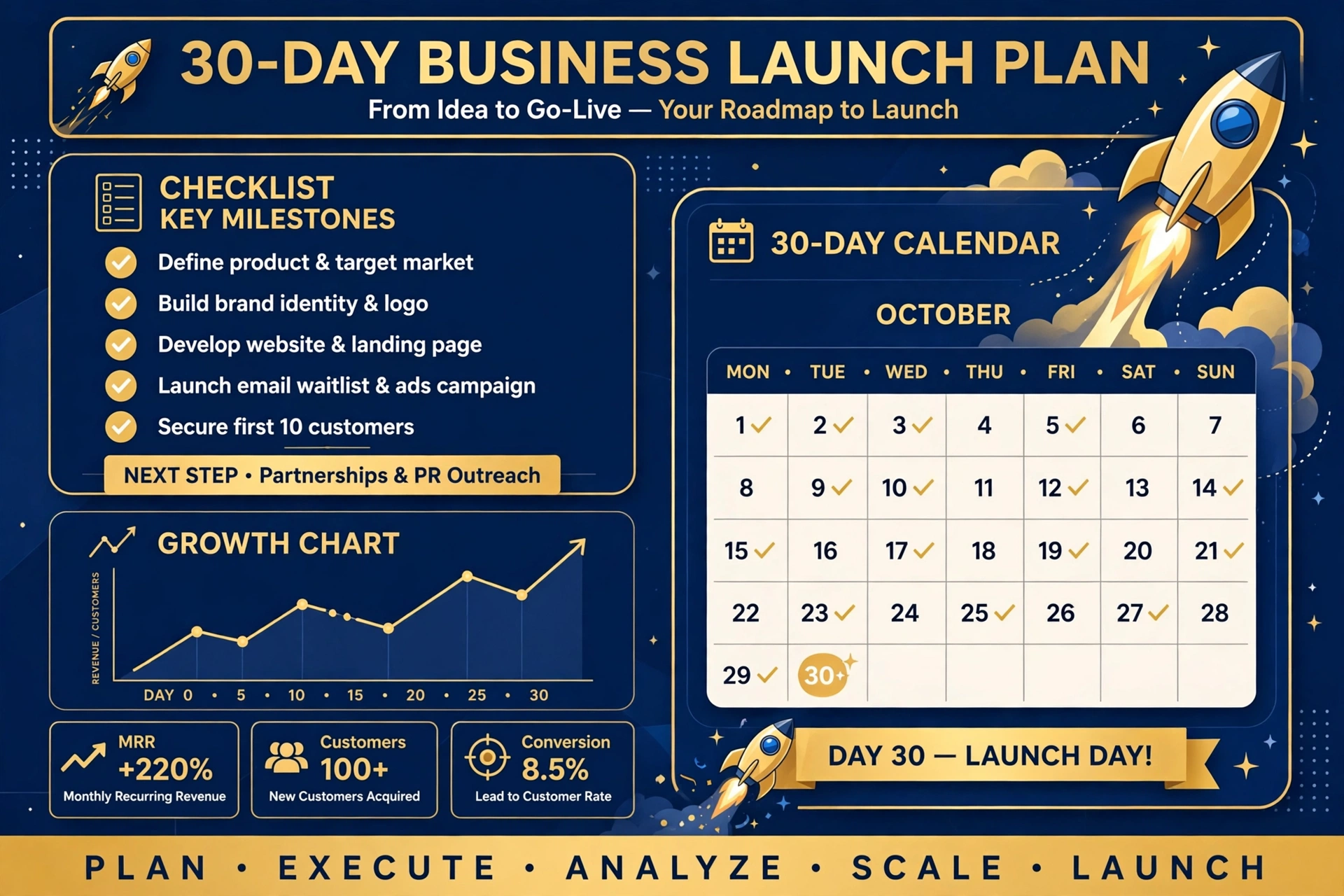
Prompt 9: The 30-Day Content Calendar
Create a 30-day content calendar for [BUSINESS] posting on [PLATFORM]. Mix: 40% educational, 30% entertaining, 20% social proof, 10% direct offers. For each day: content pillar, hook/first line, format (carousel, reel, story, static), and one-sentence concept. Avoid repeating the same format twice in a row. Tie 4 posts to [UPCOMING EVENT/SEASON] where natural.
Why it works: consistency beats brilliance on social. A full month planned in 10 minutes removes the “what do I post today” friction that kills most accounts.
Prompt 10: The Repurposing Machine
Here’s my blog post: [PASTE POST]. Repurpose it into: 5 tweet/X posts (each one standalone insight, under 280 characters), 1 LinkedIn post (hook + 3 lessons + question), 1 email newsletter section (150 words, conversational), and 3 short-form video scripts (hook + one tip each, under 30 seconds). Keep my voice and don’t repeat the same example twice.
Why it works: one good article should feed every channel. This turns a single piece of work into a week of distribution.
Email Prompts (11–13)
Prompt 11: The 25 Subject Line Test Bank
Write 25 email subject lines for an email about [TOPIC/OFFER] to [AUDIENCE]. Mix styles: 5 curiosity-driven, 5 benefit-driven, 5 with numbers, 5 question-based, 5 urgency-based. Each under 50 characters, no spam-trigger words (free, guarantee, $$$, all caps), no clickbait that the email can’t deliver on. Mark your top 3 for A/B testing.
Why it works: subject lines decide open rates, and open rates decide everything downstream. A bank of 25 means you never reuse a tired line.
Prompt 12: The 5-Email Welcome Sequence
Write a 5-email welcome sequence for new subscribers of [BUSINESS] who signed up for [LEAD MAGNET]. Email 1: deliver the lead magnet + quick win. Email 2: my story and why I do this (build trust). Email 3: biggest mistake my audience makes + how to fix it (value). Email 4: customer case study with specific numbers (proof). Email 5: soft pitch for [OFFER] with guarantee and deadline (convert). Each email 150–250 words, one CTA max, conversational tone.
Why it works: the welcome sequence is the highest-ROI email automation in existence — new subscribers are at peak attention. This structure moves them from stranger to buyer in five emails.
Prompt 13: The Cart Abandonment Rescue
Write a 3-email cart abandonment sequence for [PRODUCT] at [PRICE]. Email 1 (1 hour later): friendly reminder, restate the core benefit, easy return-to-cart link. Email 2 (24 hours later): handle the top 3 objections ([OBJECTION 1, 2, 3]) with proof. Email 3 (72 hours later): final nudge with [DISCOUNT/BONUS] expiring in 24 hours. Each under 200 words. Tone: helpful, never desperate.
Why it works: 70% of carts are abandoned, and this sequence routinely recovers 10–15% of them. That’s found revenue from traffic you already paid for.
Strategy and Research Prompts (14–15)
Prompt 14: The Customer Voice Miner
Here are 20 customer reviews of [PRODUCT]: [PASTE REVIEWS]. Extract: the 5 most repeated pain points (with the exact customer language used), the 5 most loved benefits (with exact phrasing), and 10 headline ideas built directly from customer quotes. Then write a 100-word “voice of customer” summary I can paste into future prompts so the AI writes like my buyers talk.
Why it works: the best copy sounds like your customers, not like a marketer. This prompt mines real language and bakes it into every future output.
Prompt 15: The Offer Strength Audit
Audit my offer: [DESCRIBE OFFER, PRICE, GUARANTEE, BONUSES]. Score it 1–10 on: clarity (does a stranger get it in 5 seconds?), value perception (does it feel worth 10x the price?), risk reversal (is buying a no-brainer?), and urgency (is there a reason to buy now?). For any score under 7, give me 3 specific fixes with example copy I can use.
Why it works: most “copy problems” are actually offer problems. No prompt can save a weak offer — this one tells you the truth before you spend on ads.
Advanced Tips: Getting Pro-Level Output
- Feed it winners. Paste your 3 best-performing ads or emails and say “analyze what makes these work, then write 5 more in the same style.” AI imitates patterns better than it invents them.
- Use role + audience + constraint. Every prompt should name the role (“act as a direct-response copywriter”), the audience (“for busy moms who shop on mobile”), and a constraint (“under 100 words”). The formula role + audience + constraint + task beats vague requests every time.
- Ask for the reasoning. Add “explain your choices in one line each” to get insight into why an angle might work — it trains your own judgment over time.
- Build a prompt library. Save the prompts that produce winners in a doc with the output attached. In 90 days you’ll have a custom playbook no competitor can copy.
- Never publish the first draft. AI output is a starting point at 80% quality. Your job is the final 20%: fact-check claims, inject real stories and numbers, and cut anything that sounds like a robot wrote it.
Frequently Asked Questions
Can ChatGPT really write good marketing copy?
Yes — with good prompts and human editing. ChatGPT is excellent at structure, angles, and volume: it can generate 25 subject lines or 10 ad angles in seconds. What it can’t do is know your customers’ real objections or your product’s true differentiators. Feed it that context, edit the output, and the copy is genuinely strong. Publish raw output and it reads like everyone else’s AI copy.
How do I stop ChatGPT from sounding generic?
Three fixes: (1) ban the hype words explicitly (“no revolutionary, game-changing, unlock, elevate”), (2) give it real customer language from reviews to imitate, and (3) add hyper-specific constraints — exact word counts, reading level, and format. Generic prompts produce generic copy; specific prompts produce specific copy.
Should I use these prompts for client work?
Absolutely — agencies use AI-assisted copy as standard practice now. The professional standard is: AI for drafts, angles, and volume; human for strategy, fact-checking, and final polish. Disclose AI assistance if your client contracts require it, and never let AI invent testimonials, statistics, or claims you can’t verify.
What’s the biggest mistake marketers make with ChatGPT?
One-shot prompting: asking once, accepting the output, and publishing. The marketers getting real results treat ChatGPT like a junior copywriter — brief it well, review the draft, give specific feedback, and iterate 2–3 rounds. The quality jump between round one and round three is enormous.
Do these prompts work with other AI tools like Claude?
Yes. These prompts are tool-agnostic — they work in ChatGPT, Claude, Gemini, and most AI copywriting tools. Claude tends to produce slightly more natural long-form output; ChatGPT is often faster for short ad variations. Use whichever you have and keep the prompting discipline the same.
The Bottom Line
Save this page. The 15 prompts above cover the full marketing workflow — ads, SEO, content, email, and strategy — and each one is built to produce usable output, not filler. The marketers winning with AI in 2026 aren’t using secret tools; they’re using better prompts, better context, and the discipline to iterate. Start with Prompt 1 today: generate 10 ad angles for your main product, pick the best three, and test them this week.
Have a project in mind?
Let's create something extraordinary.
Reach out today — we'll get back to you fast.